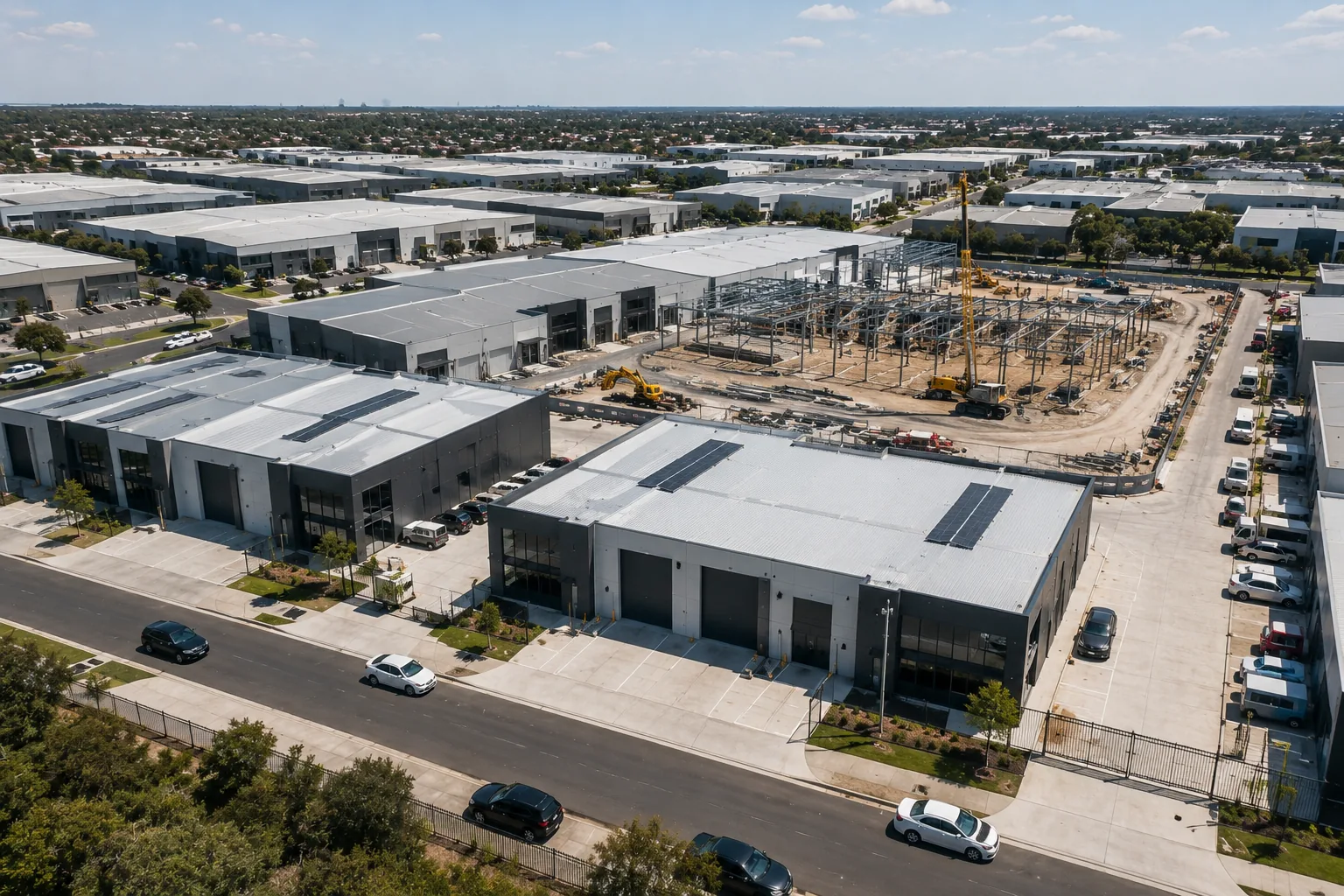
You bought or built your warehouse a few years ago, and lately you've heard tradies, developers and other owners all saying the same thing. Building new just isn't what it used to cost. If you own an existing industrial property anywhere from Laverton to Werribee to the Geelong corridor, that shift is not just industry gossip. It directly changes what your property is worth today.
Why build costs are reshaping the value equation
For a long time, the value of an existing warehouse was judged against what it would cost to knock it down and build a new one. That comparison still holds, but the numbers behind it have moved. Materials, labour, compliance and approval timeframes have all pushed the cost of new industrial construction upward across Melbourne's west. When it costs more to build new, existing buildings that are already approved, already tenanted and already generating income start to look a lot more attractive by comparison.
When new construction gets expensive, well positioned existing stock becomes the cheaper, faster option for buyers and tenants alike.
What replacement cost actually means for your property
Replacement cost is simply what it would take a developer to buy comparable land and build an equivalent facility from scratch today, including holding costs, approvals and construction risk. As that number climbs, it lifts the ceiling on what buyers are willing to pay for existing buildings that do the same job without the wait. Your warehouse does not need to be brand new to benefit from this. It needs to be functional, well located and reasonably compliant with current codes.
An existing warehouse with tenants in place and no development risk is often worth more to a buyer than the raw cost of copying it.
What is actually driving the cost of building new
Where owners get this wrong
What this means if you are thinking of selling
If rising build costs have made new development in your area slower and more expensive, that scarcity works in your favour as a seller. Buyers and occupiers who need space now, not in two or three years once a new build is finished, will often pay a premium to avoid that wait. This is worth understanding clearly before you set an asking price or knock back an early offer.
What this means if you are planning to hold
Holding has its own logic in this environment. If new supply is being delayed by cost and approval pressure, existing tenanted buildings may see steadier demand and firmer rental conditions over time. Either way, understanding where your specific property sits against the cost of building new is the starting point for any decision, whether that is selling, refinancing or simply knowing what you own.
This guide is general information only and is not financial, tax or legal advice. Manny and the Fairmont team are property specialists, not licensed financial advisers, so speak with your accountant or financial adviser before making decisions about your property or your super.
What is your industrial property worth?
We track live sales and leases across the western corridor. Get a straight appraisal within 24 hours, with no obligation.
Get your free appraisal
Fairmont only sells and leases industrial property across Melbourne's western corridor and Geelong. That focus is deliberate. It means we know the buyers who are active right now and what they are prepared to pay.