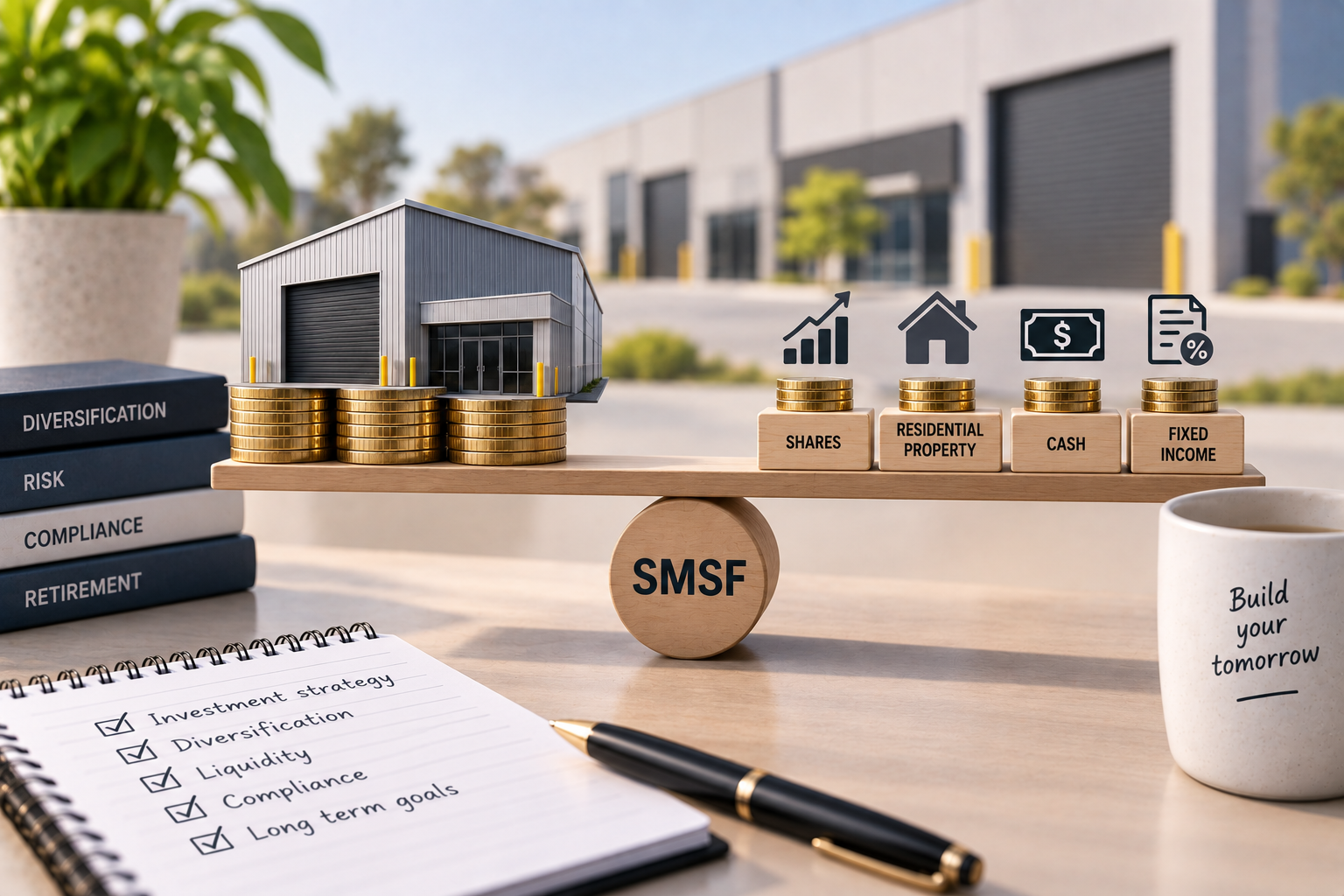
You have found a solid industrial asset in the west, maybe a freestanding warehouse in Truganina or a factory unit near the Geelong corridor, and it looks like a perfect fit for your SMSF. Before you get too far down the track, there is one conversation that matters more than the building inspection.
Why industrial property attracts SMSF trustees
Industrial assets in Melbourne's west have long appealed to self managed super fund trustees. The tenants are often businesses on longer leases, the buildings are simpler to maintain than retail or office space, and the land component gives many investors comfort. That appeal is real. It does not remove the need to think carefully about how much of your fund sits in the one asset.
A single property, however good, is still a single point of failure inside a super fund.
What concentration risk actually means
Concentration risk is simply what happens when one asset makes up a large share of your total portfolio. If that property is vacant for a stretch, needs an unexpected roof replacement, or the local market softens, your whole retirement balance feels it. Diversification exists precisely to spread that risk across different asset types, locations and tenants. This is general information only, not financial, tax or legal advice, and Fairmont Property Group is a property agency, not a licensed financial adviser.
Factors to weigh up with your adviser
Common mistakes trustees make
Questions worth taking to your adviser
Ask what proportion of your fund this property would represent once settled, how the fund would cope with an extended vacancy, and what your options would be if you needed to access capital in five or ten years. Ask them to walk through the borrowing structure if one is involved and how it affects your overall risk profile. These are the conversations that protect your retirement outcome, not just your next industrial purchase.
A good asset in the wrong proportion is still the wrong decision for your fund.
Fairmont Property Group knows the industrial stock across Melbourne's west and the Geelong corridor inside out, and we are always glad to talk through the property side of the equation. For anything touching your fund structure, contributions or borrowing, that conversation belongs with your own licensed adviser.
What is your industrial property worth?
We track live sales and leases across the western corridor. Get a straight appraisal within 24 hours, with no obligation.
Get your free appraisal
Fairmont only sells and leases industrial property across Melbourne's western corridor and Geelong. That focus is deliberate. It means we know the buyers who are active right now and what they are prepared to pay.