HomeGuides › Which lease clause decides who really controls your warehouse?

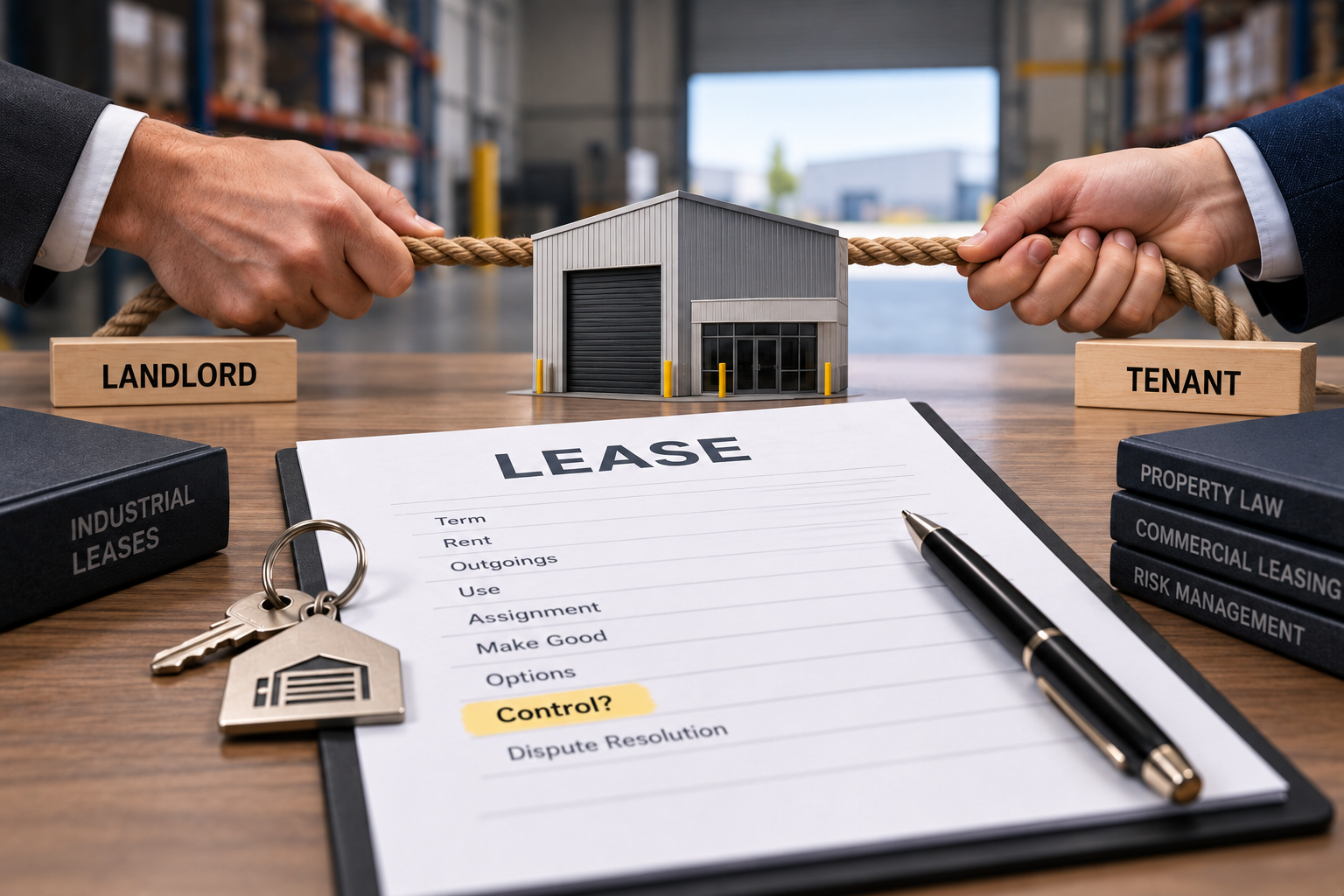
Which lease clause decides who really controls your warehouse?

A plain English guide for owners about to lease an industrial property in Melbourne's west, so you know exactly which terms protect you and which protect the tenant.

Which lease clause decides who really controls your warehouse?

You have found a tenant for your factory, warehouse or storage facility in the western corridor and now the lease is on the table. Before you sign anything, understand this. The rent figure gets all the attention, but the clauses buried in the lease document are what actually determine whether this tenancy protects your asset or slowly erodes its value.

Most owners focus on the weekly or annual rent and skim past the terms. That is backwards. A strong rent with a weak lease structure can leave you covering repairs, chasing outgoings, or stuck with a tenant who will not budge on a rent review. The terms are the real negotiation. The rent is just the headline number.

Why lease terms matter more than the rent figure

An industrial lease runs for years, often with options attached. Over that time, markets shift, tenant businesses change, and buildings age. The clauses you agree to at the start are what govern every one of those changes later. Get them right and you have a stable, low friction asset. Get them wrong and you carry the risk while your tenant enjoys the flexibility.

The lease document matters more than the rent figure because it decides who absorbs risk over the full term, not just on day one.

The clauses that protect you as landlord

1
Make good obligationsA clear clause requiring the tenant to return the property in the condition agreed, including removal of fitout and repair of any damage caused by their operations.
2
Outgoings recoveryLand tax, council rates, insurance and land related costs passed through to the tenant rather than absorbed by you, spelled out with no ambiguity.
3
Bank guarantee or bondSecurity equivalent to a set number of months rent, held against default or damage, released only once obligations are met.
4
Permitted use clauseA tightly defined use so the tenant cannot bring in an activity that breaches planning controls or increases your insurance risk.
5
Rent review mechanismA structured increase, whether fixed, CPI linked or market based, so your return does not stagnate over a long term.

The clauses that protect your tenant

1
Quiet enjoymentThe tenant's right to operate without unreasonable interference from the landlord during the lease term.
2
Option to renewCertainty for the tenant to extend if their business is settled in the space, which also gives you continuity of income.
3
Repair responsibility splitStructural and capital items generally sit with the landlord, while day to day maintenance sits with the tenant.
4
Assignment and subletting rightsReasonable ability to transfer the lease if the tenant's business is sold or restructured, usually subject to landlord consent.
5
Disturbance and access noticeFair notice periods before the landlord or agents enter the premises for inspections or works.

Mistakes owners make when negotiating leases

Chasing the highest rentAccepting a higher figure attached to a weak make good clause or no bank guarantee, which costs more later than it earns now.
Vague outgoings wordingLeaving land tax and insurance recovery loosely worded, which tenants will interpret in their own favour.
No rent review structureLocking in a flat rent for the full term with no mechanism to move with the market.
Ignoring permitted useAllowing a broad or undefined use clause that opens the door to activities you never agreed to.
Skipping legal reviewUsing a generic template lease instead of having a solicitor tailor it to industrial use and your specific asset.

Finding the balance in the western corridor market

The strongest leases are not one sided. A tenant who feels protected on quiet enjoyment and reasonable notice periods is more likely to stay long term, maintain the property well, and renew rather than vacate. That stability is worth more to you than squeezing every clause in your favour. Demand for industrial space across the western suburbs has kept landlords in a reasonably strong negotiating position, though conditions vary by precinct and building type.

A lease that protects both sides properly is the cheapest insurance policy you will ever buy on an industrial asset.

Typical lease terms for industrial space in this corridor tend to run longer than retail or office, which affects how much weight you should put on getting the review and make good clauses right from the outset.

What is your industrial property worth?

We track live sales and leases across the western corridor. Get a straight appraisal within 24 hours, with no obligation.

Get your free appraisal

Manny Singh
Manny Singh
Director (OIEC), Fairmont Property Group

Fairmont only sells and leases industrial property across Melbourne's western corridor and Geelong. That focus is deliberate. It means we know the buyers who are active right now and what they are prepared to pay.

Free Market Report

What industrial land in Melbourne's west is actually worth in 2026.

See the rents, land rates, vacancy and sale prices across Truganina, Laverton, Derrimut and the Geelong corridor. They're the same numbers we use when we advise owners, and they're yours free with no obligation.

Opens straight away. We only follow up if you ask.