You've built some equity, you're tired of chasing residential yields that barely cover the mortgage, and someone at a barbecue mentioned industrial property in the west is where the smart money has gone. Before you sign anything, you need to know what actually makes an industrial asset a strong long term hold, because not every shed in every suburb qualifies.
Why the western corridor keeps attracting long term capital
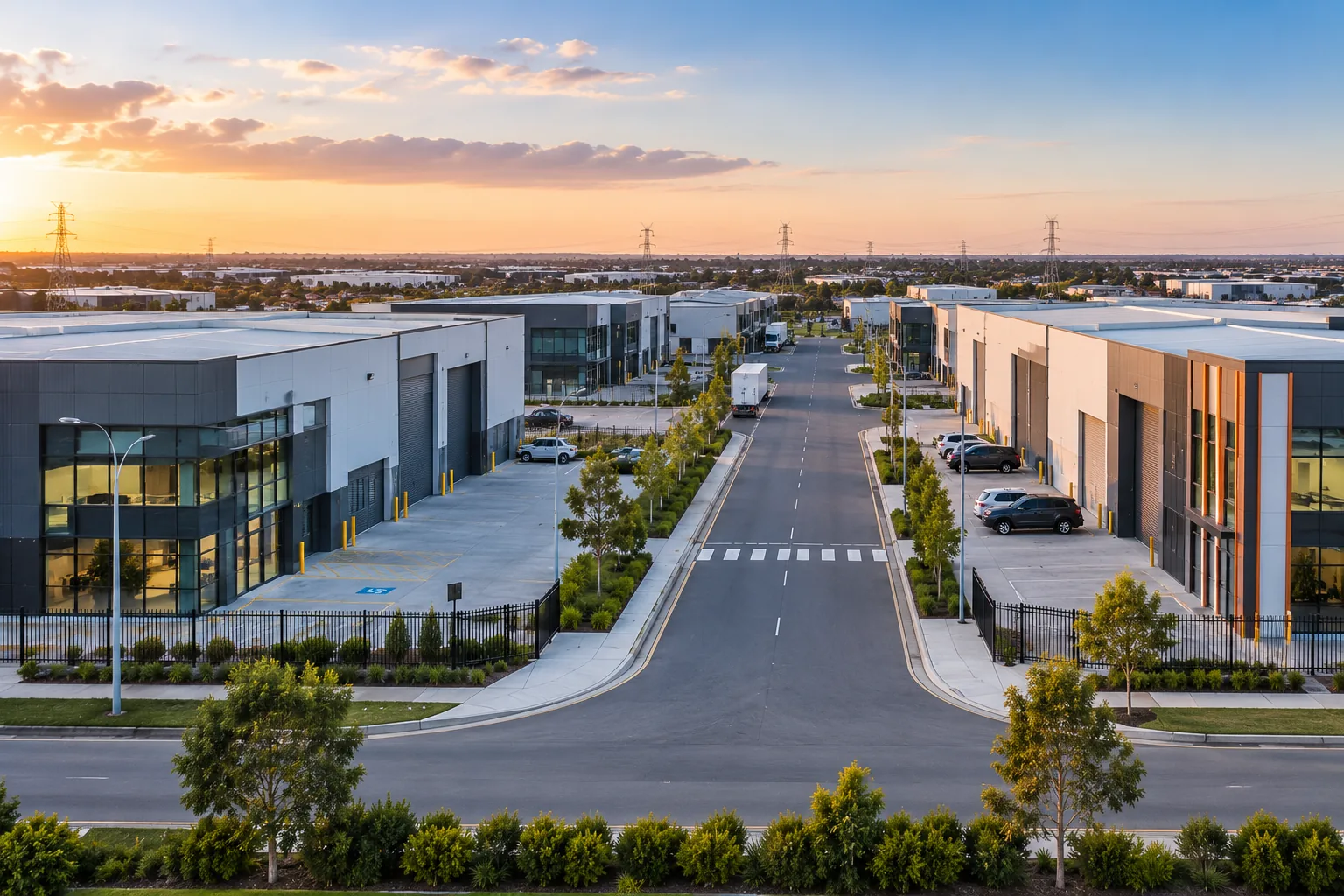
Melbourne's west has spent years absorbing population growth, freight movement and logistics demand that the inner and eastern suburbs simply cannot accommodate anymore. Corridors like Truganina, Laverton North, Derrimut and the Geelong link have become the practical answer to a city that needed more industrial land and had nowhere else to put it.
Land scarcity closer to the city has pushed occupiers further west, and that shift underpins most of the long term value story.
This is not a speculative bet on a suburb becoming trendy. It is a structural shift in where freight, manufacturing and storage businesses need to be to stay competitive.
The location factors that decide whether your asset appreciates
Not every parcel in the west benefits equally. The properties that hold and grow in value share a handful of traits.
Building traits that hold value decades from now
Sheds are not all built the same, and the differences show up when you eventually try to lease or sell.
A shed built for yesterday's tenant is a liability. A shed built for tomorrow's tenant is an asset.
Where investors get it wrong
Some buyers walk into industrial property expecting it to behave like residential, and that assumption causes real damage.
Land, lease and tenant structure basics
The strength of an industrial investment usually comes down to three things working together, the land, the lease and the tenant. A well located parcel with a weak lease structure underperforms. A strong tenant on a short lease in a poor location is fragile. You want alignment across all three, not strength in just one.
The best industrial assets are boring in the best possible way, solid land, a sensible lease, and a tenant who needs to be exactly where you are.
If you're considering buying through an SMSF
Some investors look at industrial property as a way to diversify their self managed super fund away from listed shares and residential property. This is general information only, not financial, tax or legal advice, and Fairmont is a property agency, not a licensed financial adviser. If an SMSF purchase is something you're weighing up, speak with your own accountant, financial adviser or SMSF specialist about borrowing rules, contribution limits and whether an industrial asset suits your fund's overall strategy before you act on anything in this guide.
What is your industrial property worth?
We track live sales and leases across the western corridor. Get a straight appraisal within 24 hours, with no obligation.
Get your free appraisal
Fairmont only sells and leases industrial property across Melbourne's western corridor and Geelong. That focus is deliberate. It means we know the buyers who are active right now and what they are prepared to pay.